Frequently Asked Questions
General FAQ
A seaplane rating is an add-on to your existing pilot certificate that allows you to legally operate aircraft on water using floats. It’s one of the most practical—and fun—ratings you can earn as a pilot.
Typically, Alaska Float Ratings float season starts June 1 and extends until September 15, though weather may effect our opening date by a few weeks. We generally have floats planes on the water, ready to fly by the end of May or the beginning of June (depending on lake conditions) and they continue float operations through the middle of September.
We generally swap our Super Cubs from their wheels and put them on floats as soon as lake ice thaws and switch the cubs back to wheels shortly before lakes start to freeze.
Actual dates may vary year to year.
Our courses begin at $1,995 for our Float Rating Refresher Course. There are multiple course options available and lodging if needed.
Please visit our Course page for more details.
You must:
- Hold at least an FAA Private Pilot Certificate
- Be current and proficient
- Have a valid medical
Yes, as a basic minimum you should plan to bring:
- Pilot certificate & medical
- Government-issued ID
- Headset (if you have one)
- Weather-appropriate clothing (layers are key in Alaska)
- Sunglasses
Yes, depending on availability.
We offer one-on-one introductory flight experiences for those wishing to experience flying in a float rating training environment, but we also offer scenic floatplane experiences for those wishing to experience a scenic tour of beautiful Alaska.
Yes.
We offer advanced float and backcountry operations training for pilots looking to build additional skills beyond the rating.
All of our float rating courses provide backcountry flight training experience, due to our flight training location.
If you are looking for a higher level of backcountry and advanced off airport training experience, we recommend booking our longer, Premium Float Backcountry Course.
You can also add additional flight time at the end of your float rating training to receive as much extra learning and experience as you’d like.
Absolutely.
We operate in full compliance with FAA regulations and safety standards. In addition to meeting these regulations and safety standards, we also operate our own FAA Approved Safety Management System (SMS) that continuously monitors potential threats in real time and allows us to make any necessary adjustments to maintain the highest levels of safety.
Training Experience FAQs
Alaska Float Ratings float rating packages are designed to give you the training you need to become a safe, proficiently rated Single Engine Seaplane pilot. In our experience, currently rated pilots are checkride ready after about eight hours of flight instruction, which can typically take place over the course of a 3-5 days, with your checkride pre-scheduled (by us) on your last day. We suggest planning on at least five days for anyone traveling to Alaska from out of state, to allow for the occasional weather delays.
However, our courses range from 3 days to 6 days, depending on your preferred level of training.
Our Optimal Float Backcountry Course for float plane flying consists of up to 8 hours of flight time and takes 3-4 days, while our Adventure Bush Flying Course provides up to 15 hours of float plane flying and takes 5-6 days.
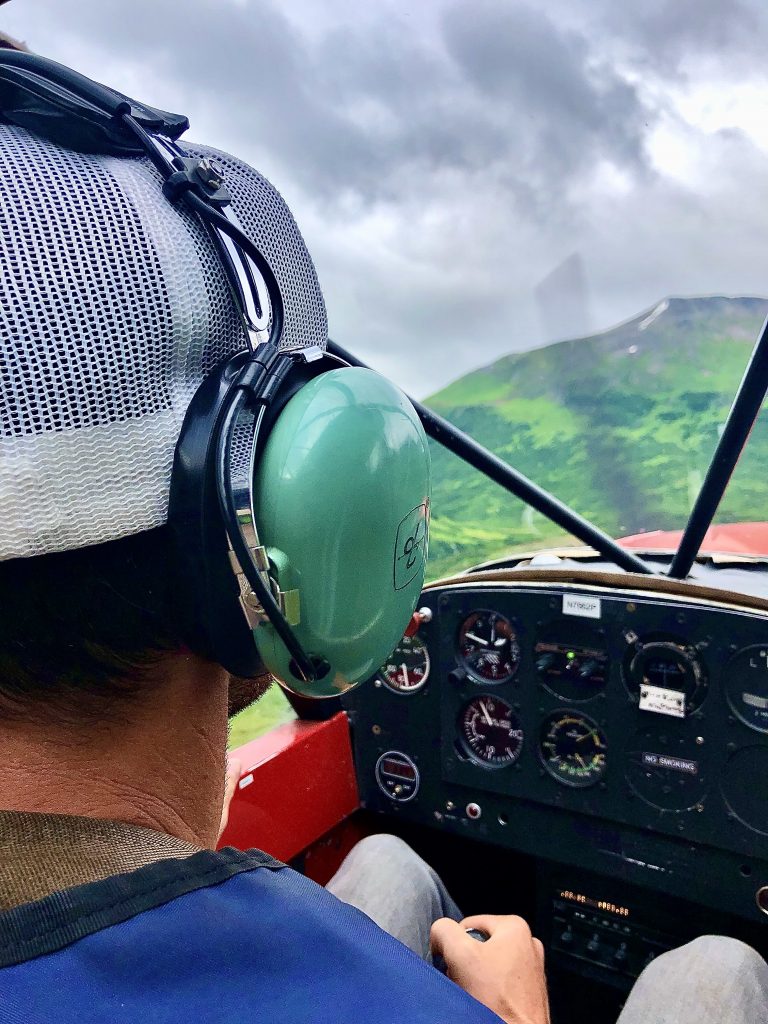
Alaska Float Ratings utilizes multiple 160 horsepower Piper PA-18 “Super Cubs” on EDO 2000 floats. The classic “Alaska aircraft” that change landing gear based on the season: floats or large bush wheels.
During the Alaska Float Ratings float training course you will learn:
- Water takeoffs and landings (glassy, rough, confined areas)
- Docking, sailing, and ramp procedures
- Wind and water condition assessment
- Emergency procedures
- Floatplane-specific aerodynamics
- Mountain flying techniques
This is not an inclusive list, but provides you with an overview of planned training topics.
Yes.
When your float rating training has been completed you will complete a practical test with a Designated Pilot Examiner (DPE) to earn your seaplane rating.
Our DPE is based on site, which make scheduling a very smooth and easy process. When your CFI says you’re ready, we generally schedule your checkride for the next day.
We focus on real-world proficiency, not just checkride completion.
Many float schools teach to the minimum standard. Our approach is different—we train you to confidently operate a floatplane in real environments, not just pass a test. That means more emphasis on decision-making, water conditions, and practical scenarios you’ll actually encounter after you leave.
We also keep our training intentionally small and personal. You’re not just another slot in a schedule—you’ll get one-on-one instruction, consistent aircraft access, and a pace tailored to how you learn best.
And finally, there’s Alaska. Training here exposes you to diverse water conditions, terrain, and weather that simply can’t be replicated elsewhere. It’s not just a rating—it’s an experience that builds real confidence.
Each day is a mix of flight training, ground instruction, and real-world application, adjusted based on weather and your progress.
A typical day might look like:
- Morning: Weather briefing, ground instruction, and your first flight
- Midday: Break, debrief, and additional ground training, as necessary
- Afternoon: Second flight focused on building skills or introducing new scenarios
Most students fly 1–2 times per day, depending on conditions and training flow.
We keep the schedule flexible, which is important in Alaska. If weather shifts, we adapt—using that time for valuable ground training so you’re always progressing.
By the end of the course, you’ll have experienced a wide range of operations and feel prepared—not rushed—heading into your checkride.
Location and Logistics
We are based on Trail Lake in Moose Pass, Alaska, surrounded by some of the most scenic and ideal float flying terrain in the world.
Trail Lake, Alaska’s ultimate backcountry training location, is centrally located on the Kenai Peninsula offering convenient proximity to popular fishing, hiking and tourist attractions while providing a spectacular environment for Floatplane and Mountain Flying.
See our location on Google by clicking here.
Most people fly into Anchorage (ANC).
- From there, it’s about a 1.5–2 hour drive to Moose Pass
- Rental cars are the most common option for transportation to our location
You can find detailed information about all of the modes of transportation available on our Transportation page.
Yes.
We offer on-site cabin accommodations designed specifically for our students. Cabins include basic amenities like kitchenettes to keep your stay comfortable and convenient.
You can find detailed information about our lodging options on our Lodging page.
Weather and Scheduling
Weather is normal part of Alaska flying.
We train in a variety of conditions, but if it becomes unsafe:
- Training may be delayed or adjusted
- We use downtime for ground instruction
We build schedules with flexibility in mind.
Safety is our number one priority and we will make decisions surrounding flying and schedule adjustments based on that priority.
Weather in Alaska is generally very beautiful and mild in the summer months, but sunshine, cloud cover and wind changes occur often.
Spring & Fall (May & September): These are transitional “shoulder” seasons. Spring warms up quickly from April to mid-May, while September to October transitions quickly into freezing, darker winter days. Spring is typically the driest time of the year.
Summer (June – August): Days are long with 16 to 19 hours of sunlight (though we only fly from 8:00am- 8:00pm). Average daytime highs range from the mid-50s to mid-60s°F (13–19°C), though inland areas can occasionally push into the 70s. Rain becomes more frequent in late summer, with August and September historically being the wettest months.
Cost and Booking
We are based on Trail Lake in Moose Pass, Alaska, surrounded by some of the most scenic and ideal float flying terrain in the world.
Trail Lake, Alaska’s ultimate backcountry training location, is centrally located on the Kenai Peninsula offering convenient proximity to popular fishing, hiking and tourist attractions while providing a spectacular environment for Floatplane and Mountain Flying.
See our location on Google by clicking here.
Our courses begin at $1,995 for our Float Rating Refresher Course. There are multiple course options available and lodging if needed.
Please visit our Course page for more details.
Typically includes:
- Aircraft rental
- Instructor time
- Ground instruction
- Training materials
- Checkride coordination
Some costs like examiner fees are paid separately to the DPE.
- Contact us via our website registration form
- Verify your preferred dates with our staff
- Secure your spot with a deposit
Experience and Value
We have a few options if you do not wish to get your float plane rating and would rather just fly a few hours for the amazing experience.
- Float Plane and/or Mountain Flying Refresher Course ($1,695) – This provides up to 4 hours of float plane flight time as a refresher for those who already have a float plane rating or as an adventure course for those who want to get out and see the Alaska backcountry in a float plane.
- 30 minute flight for ($149) – Simple, yet rewarding.
This 30 minute float plane flight lets you experience the exhilaration of flying in a genuine Alaska bush plane as it gracefully lifts off from the glacier water filled Trail Lake. Endless glacier carved mountains and valleys accented by the many alpine glaciers tucked in the cirques of the steep Chugach Mountains, with potential to see mountain goats, bears or other wildlife. - 60 minute flight ($249) – Our most popular flight-seeing tour.
Experience the exhilaration of flying in an Alaska bush plane and truly immerse yourself in the magnificent views from the sky. This tour provides opportunities to see endless lakes, streams and mountain beauty as well as ice fields with over 700 square miles of glaciers. Potential wildlife sightings add to the breath-taking beauty from every window seat.
An experience you will never forget.
Alaska has so much to offer, in terms of memories AND aeronautical experience. The lessons you receive here will develop confidence in your future ability to recognize and handle environmental factors associated with mountain flying. These lessons can be applied to all of your flying, not just flying floats. You will leave Alaska Float Ratings as a better pilot.
Float training in Alaska offers:
- Real-world float flying conditions
- Diverse water environments
- Minimal airspace congestion
- Unmatched scenery
It’s not just training—it’s an experience.
You can read personal experiences from some of our past students here.
Absolutely!
Guests are welcome, but space may be limited. Let us know in advance so we can help coordinate accommodations.
Our standard student cabin accommodations only allow one or two individuals, but we do have larger cabins available for rent, availability permitting.
Can't Find What You Were Looking For?
If you weren’t able to find the answer you were looking for please reach out to us via one of the below contact options and we’ll provide you with the information that you need. We look forward to chatting with you.
Call Us
Call us and we can answer your questions.
Send us a Text Message
Send us a text message and we'll respond as soon as possible to answer your questions.
Send Us an Email
Simply put your questions in an email and we'll get back to you as soon as we can.
Chat Online
Use the chat function in the bottom corner of the screen. Someone is usually available during normal business hours and can answer within a few minutes. If you don't receive a response, please use one of the above options.